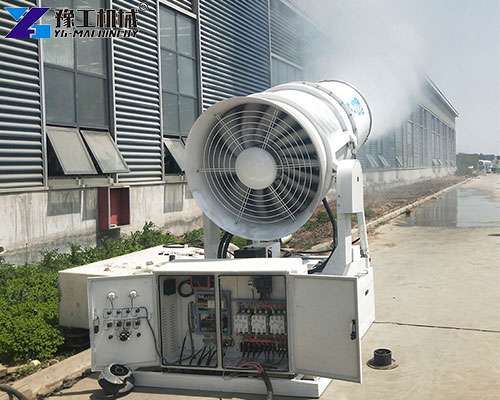
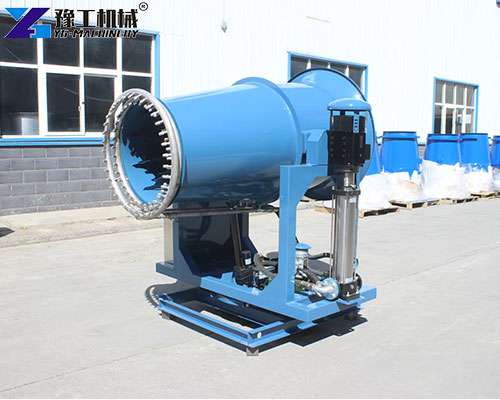
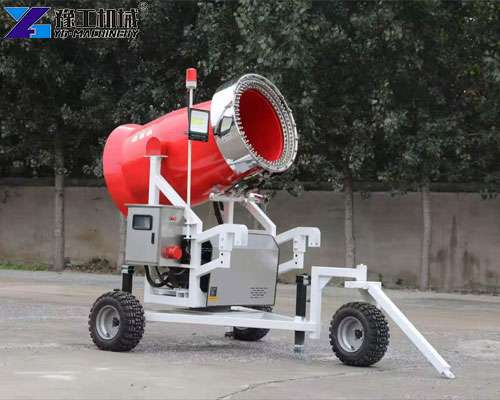
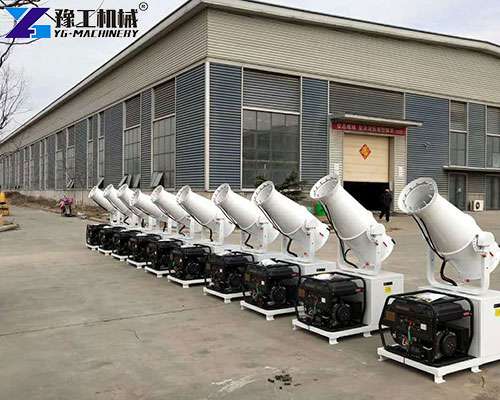
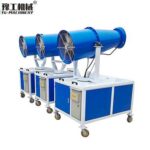
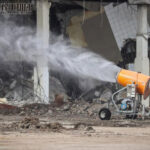
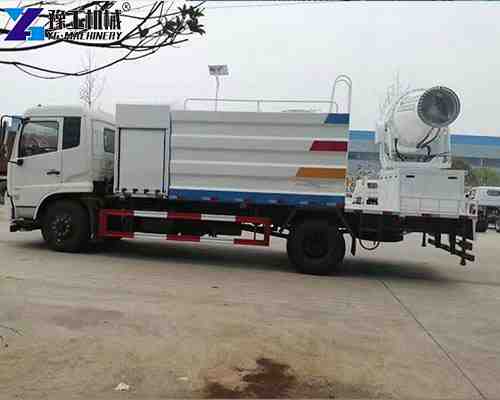
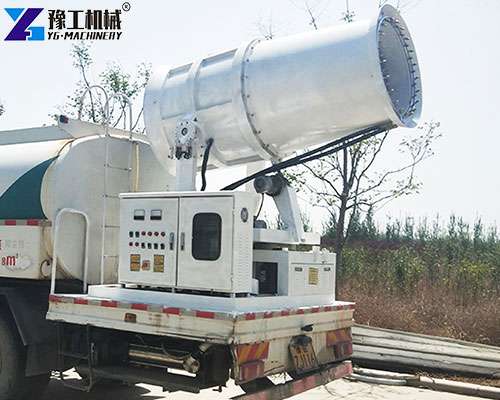
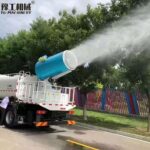
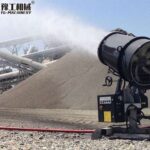
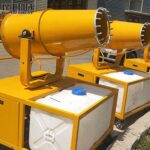
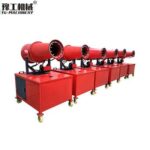
Choosing the right dust suppression equipment is not only about price or brand. For construction sites, mining areas, and industrial projects, selecting equipment based on the right parameters directly affects dust control efficiency, operating cost, and regulatory compliance.
At the consideration stage, buyers usually ask: “Which technical parameters really matter for my project?” Below are the key factors that should guide your decision.
Spray range determines how large an area can be covered by a single unit. Insufficient coverage often leads to uneven dust control and repeated operation.
What to consider:
Size of the construction or mining area
Height and distance of dust sources
Whether wide-area coverage is required
For large open sites, equipment with longer spray range provides more efficient coverage and reduces the number of units needed.
Why it matters: Air volume affects how effectively fine mist particles remain suspended in the air and capture dust. Poor atomization results in water droplets falling too quickly without binding dust.
What to consider:
Ability to produce fine mist instead of heavy droplets
Stable airflow under continuous operation
Performance in windy or open environments
High-quality atomization is critical for controlling PM10 and PM2.5 dust particles.
3.Water Consumption Efficiency
Why it matters: Many projects operate in areas with limited water supply or strict environmental regulations. Excessive water usage increases operating costs and may cause secondary pollution.
What to consider:
Water usage per hour
Balance between dust suppression efficiency and water consumption
Compatibility with recycling or external water sources
Efficient dust suppression equipment achieves effective control with minimal water use.
Why it matters: The power source affects operating flexibility, energy cost, and emission compliance.
What to consider:
Availability of electricity on site
Emission and noise restrictions
Operating hours and fuel costs
Electric systems are often preferred in urban or enclosed areas, while diesel-powered equipment suits remote or mobile sites.
5.Mobility and Installation Method
Why it matters: Different projects require different levels of mobility. Fixed systems may be efficient for long-term sites, while mobile solutions offer flexibility.
What to consider:
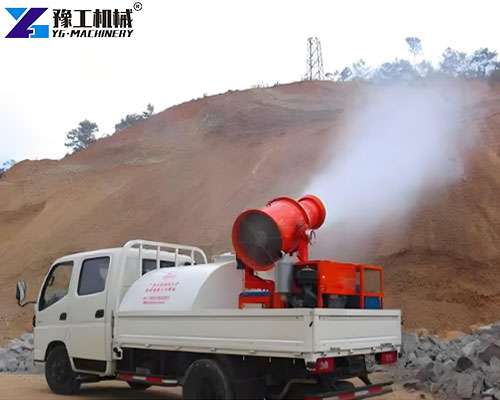
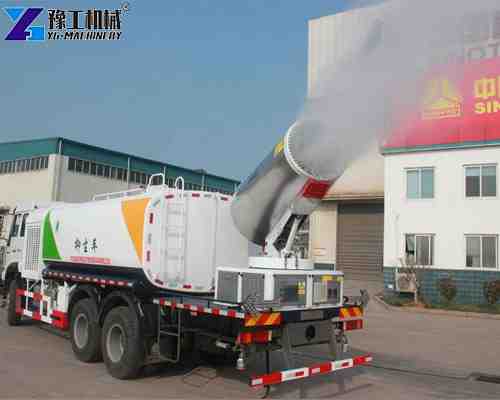
Fixed, trailer-mounted, or vehicle-mounted configurations
Ease of relocation within the site
Space limitations and access conditions
Choosing the right mobility option improves operational efficiency and site adaptability.
When selecting dust suppression cannon, the most important parameters are not isolated numbers but how well they match your actual working conditions. Spray range, airflow, water efficiency, power type, mobility, and compliance capability should be evaluated together.
Understanding these parameters at the consideration stage helps buyers narrow down suitable solutions before moving to final model selection and pricing discussions.