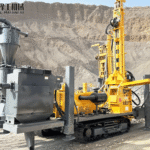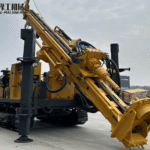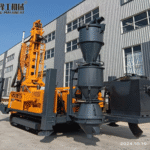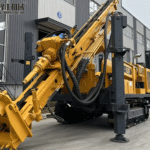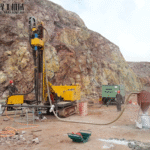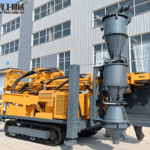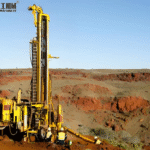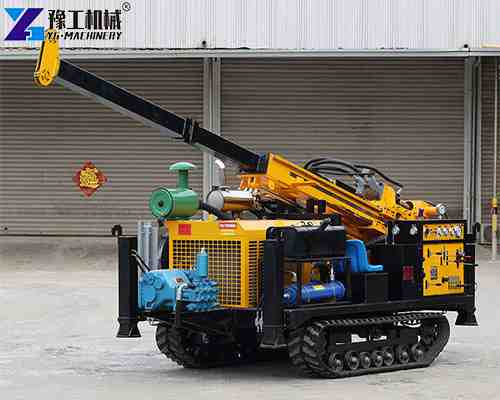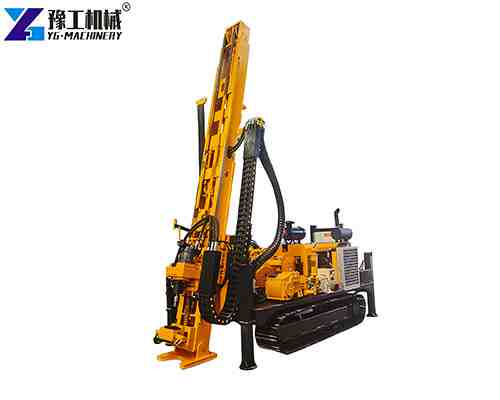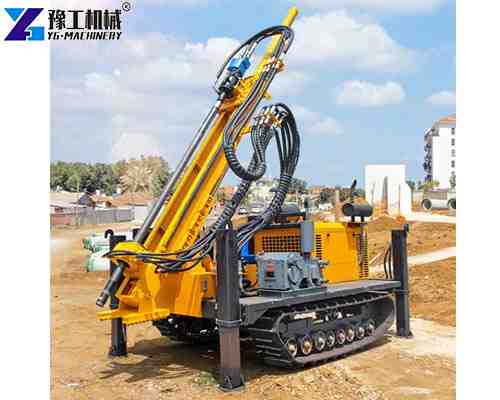
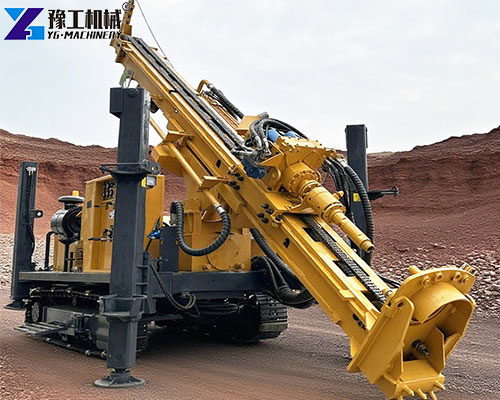
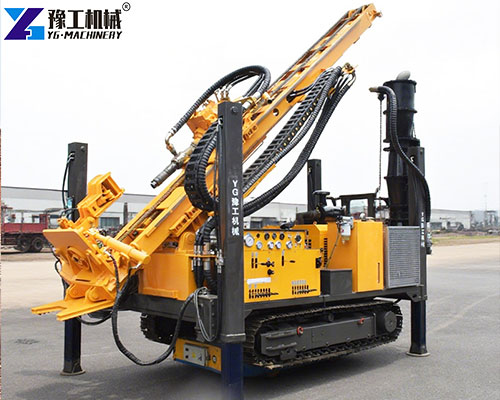
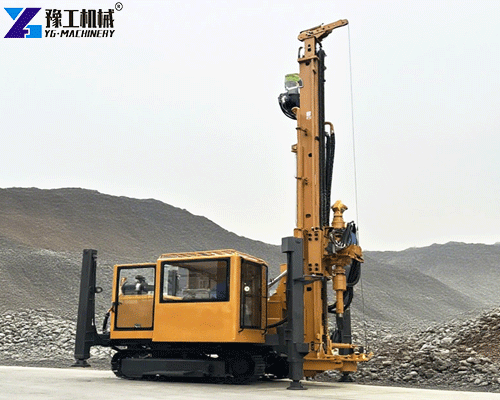
A reverse circulation drilling rig is a high-efficiency drilling system designed for fast penetration, clean cuttings recovery, and stable operation in loose or unstable geological formations.
Unlike conventional forward-circulation drilling methods, reverse circulation (RC) technology transports cuttings through the inner drill pipe, allowing for better hole cleanliness, reduced material loss, and more accurate formation sampling. For contractors and exploration teams working in sand, gravel, cobble, or water-bearing ground, RC drilling has become a reliable and cost-effective solution.
This article provides a clear introduction to the working principle, technical advantages, application scenarios, and a real project case of a reverse circulation drilling rig for sale.
Reverse Circulation Drilling Rig Parameters
| Technical Parameters | Unit | YG-400 | YG-500 | YG-600 | YG-800 | YG-1200 |
| Max drilling depth | m | 400 | 500 | 600 | 800 | 1200 |
| Hole diameter | mm | 105–305 | 105–400 | 105–450 | 105–550 | 105–800 |
| Recommended working pressure | MPa | 1.2–3.5 | 1.6–6 | 1.6–6 | 1.6–8 | 1.6–8 |
| Recommended air consumption | m³/min | 16–55 | 16–55 | 16–75 | 16–96 | 16–96 |
| Drill pipe length | m | 3 | 3 | 3 | 6 | 6 |
| Recommended drill pipe diameter | mm | 89/102 | 102/114 | 102/114 | 114/127 | 127/146 |
| RC double-wall pipe diameter | mm | 89/102 | 102/114 | 102/114 | 114/127 | 127/146 |
| Feed force | T | 6 | 7 | 7 | 11 | 13 |
| Lifting force | T | 22 | 25 | 29 | 47 | 57 |
| Fast lifting speed | m/min | 20 | 23 | 29 | 29 | 30 |
| Fast feeding speed | m/min | 32 | 33 | 33 | 42 | 44 |
| Max rotary torque | Nm | 8000/4000 | 10000/5000 | 12000/6000 | 18000/9000 | 24000/12000 |
| Max rotary speed | r/min | 75/150 | 75/150 | 75/150 | 70/140 | 86/172 |
| Aux winch lifting force | T | 1.5 | 1.5 | 2.5 | 2.5 | 2.5 |
| Mast stroke | m | 1.6 | 1.6 | 1.7 | 1.7 | 1.7 |
| Travel speed | km/h | 10–35 | 10–35 | 10–35 | 10–35 | 10–35 |
| Gradeability | ° | 21 | 21 | 21 | 21 | 21 |
| Machine weight | T | 11 | 12 | 12.5 | 17 | 23 |
| Overall dimensions (L×W×H) | m | 7×1.85×2.86 | 7×2.1×2.9 | 7×2.1×2.9 | 10.5×2.25×3.3 | 11.5×2.25×3.4 |
| Engine | / | Yuchai 92kW | Cummins 132kW | Cummins 132kW | Cummins 194kW | Cummins 264kW |
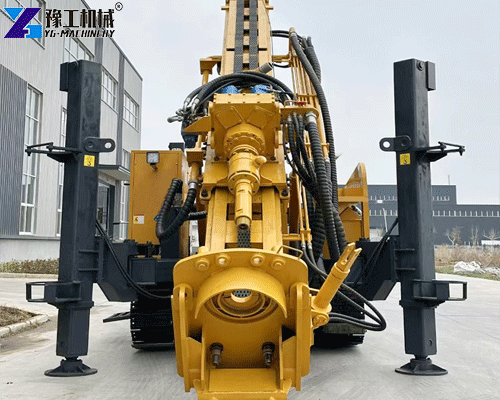
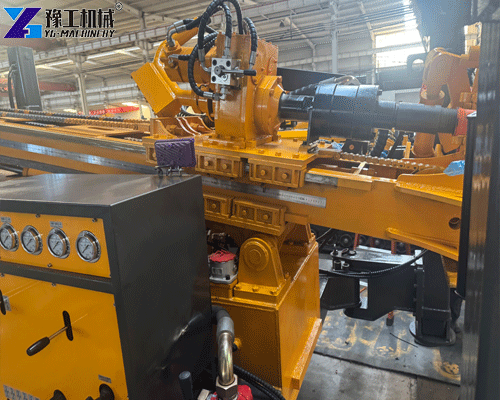
Key Advantages of a Reverse Circulation Drilling Rig
A reverse circulation drilling rig (RC rig) uses a special airflow or fluid circulation system. Instead of pushing cuttings upward along the annulus like a standard rotary rig, the RC rig draws drilling fluid downward along the hole wall, and the cuttings are sucked up through the inner drill pipe.
Unlike a hydraulic core drilling rig, which is designed to recover intact core samples for detailed geological analysis, reverse circulation drilling focuses on fast penetration and efficient removal of cuttings in loose or unstable formations. This reverse flow brings several unique advantages:
High Drilling Efficiency
Efficient cuttings evacuation keeps the drilling bit clean and reduces unnecessary resistance. RC drilling maintains a stable penetration rate even in challenging formations such as:
- sand
- gravel
- cobblestone layers
- loose, unstable soil
This makes reverse circulation drilling particularly suitable for large-diameter and medium-to-deep drilling projects.
Clean Cuttings Recovery
Because cuttings are transported through the inner pipe, they do not mix repeatedly with drilling fluid inside the borehole. This leads to:
- cleaner and more representative samples
- reduced sediment buildup at the hole bottom
- fewer interruptions for hole cleaning
Improved Borehole Stability
In loose formations, excessive cuttings accumulation often causes hole collapse or stuck tools. Reverse circulation minimizes this risk by maintaining continuous material removal, improving overall drilling stability.
Lower Operating Cost
Although the initial investment in an RC drilling rig may be higher than conventional equipment, it significantly reduces:
- drilling downtime
- fluid and material consumption
- tool wear
- corrective rework
Over the full project cycle, reverse circulation drilling delivers a lower total cost per meter.
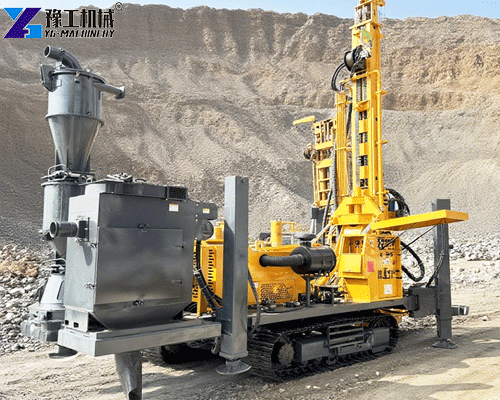
Typical Application Scenarios
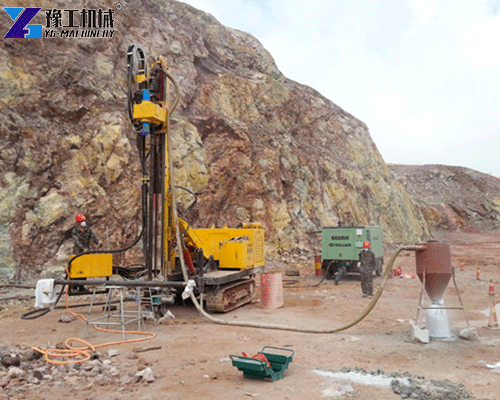
Reverse circulation drilling rigs are widely used in projects that require high efficiency and clean drilling results, including:
- Geological exploration drilling
- Engineering investigation and site survey
- Large-diameter foundation holes
- Mining exploration and sampling
- Infrastructure and municipal engineering
- Geotechnical and hydrogeological investigation
For projects involving loose or unstable ground conditions, RC drilling is often the preferred technical solution.
Reverse Circulation Drilling vs. Forward Circulation Drilling
Drilling Performance
- RC drilling: Faster penetration and stable operation in sand and gravel
- Forward circulation: Suitable for clay or hard rock, but less efficient in loose layers
Hole Cleanliness
- RC drilling: Minimal sediment accumulation, cleaner borehole bottom
- Forward circulation: Cuttings settle easily, requiring frequent cleaning
Sampling Quality
- RC drilling: Fast return and low contamination of cuttings
- Forward circulation: Mixed cuttings and delayed recovery
Project Economics
RC drilling reduces non-productive time and material loss, often resulting in lower overall construction costs despite higher equipment value.
Project Case: RC Drilling in Loose and Water-Bearing Formations (Mexico)
A construction contractor in Mexico required a drilling solution for large-diameter holes in sandy and gravel-rich ground with high moisture content.
Their previous drilling equipment faced recurring issues:
- slow penetration
- frequent pipe sticking
- unstable hole conditions
- excessive fluid consumption
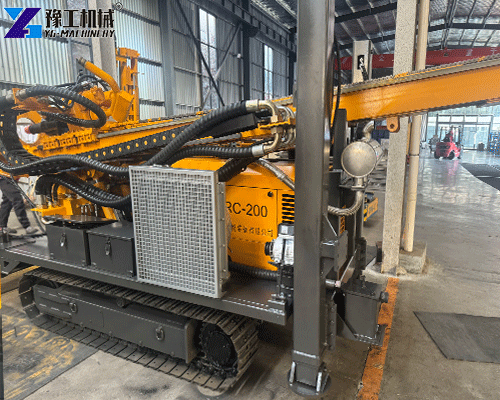
After technical evaluation, the contractor selected a reverse circulation drilling rig for sale from YG Machinery, equipped with:
- high-capacity air and suction system
- reinforced double-wall drill pipes
- optimized hydraulic control
Project Results
- Drilling efficiency improved by approximately 40%
- Material and fluid consumption reduced by around 60%
- Boreholes remained stable throughout drilling
- Project duration shortened significantly
- Sampling quality improved, supporting accurate geological evaluation
The customer confirmed that the RC drilling machine price was fully justified by the operational savings and improved project reliability.
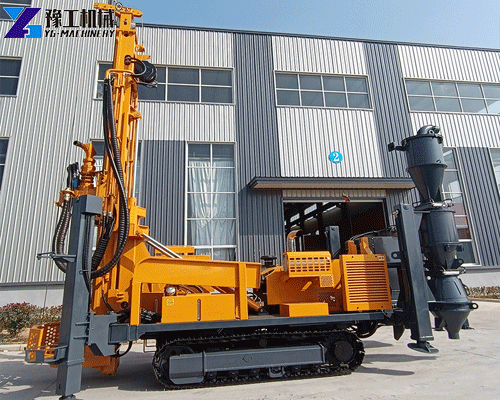
Why Choose YG Reverse Circulation Drilling Rigs?
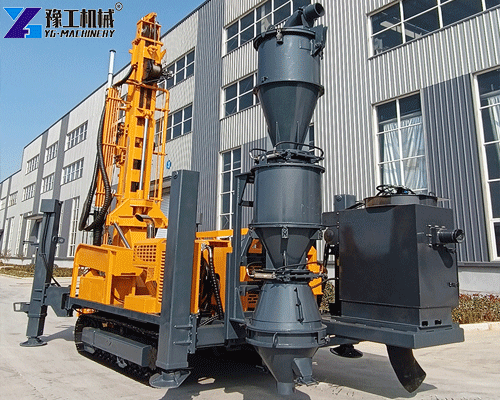
YG Machinery develops drilling systems focused on structural strength, circulation efficiency, and long-term reliability.
Key Strengths
- Heavy-duty frame with strong torque output
- Professionally engineered reverse circulation system
- Stable hydraulic control and smooth operation
- Excellent performance in loose and unstable formations
- Low maintenance requirements and long service life
- Complete technical support and spare parts supply
YG Machinery offers a full range of reverse circulation drilling rigs for sale, with configurations adaptable to different drilling depths, diameters, and site conditions.
Need Technical Details or a Quotation?
Contact YG Machinery to receive detailed specifications and a competitive quotation for a reverse circulation drilling rig tailored to your project requirements. If your project requires intact core recovery rather than cuttings sampling, you may also explore our hydraulic crawler core drilling rig solutions for geological investigation.