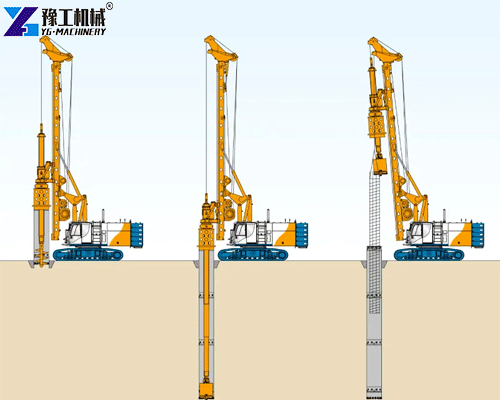
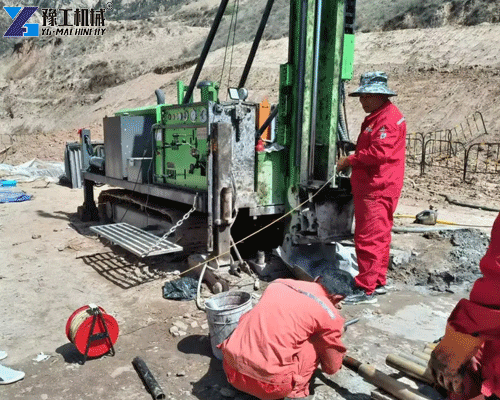
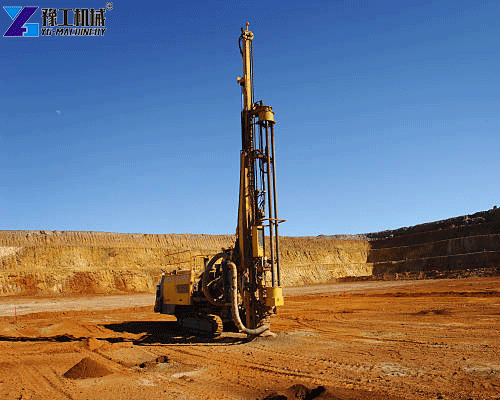
Mineral exploration is a complex process that requires accurate underground information before mining decisions can be made. Since mineral deposits are hidden beneath the surface, exploration teams rely on advanced drilling technologies to investigate rock formations, collect samples, and evaluate potential resources.
Choosing the right mineral exploration drilling method directly affects sample quality, drilling efficiency, exploration costs, and the accuracy of geological assessments.
Different drilling methods are developed to solve different exploration challenges. These methods are usually performed using different types of exploration equipment. For a detailed comparison of equipment categories, you can learn more about types of mineral exploration drilling rigs.
This guide explains the major mineral exploration drilling methods, including their working principles, sample collection processes, advantages, limitations, and suitable geological conditions.
Mineral exploration drilling methods are techniques used to penetrate underground formations and obtain geological information during the exploration stage.
Unlike surface surveys, drilling provides direct access to underground formations, allowing geologists to analyze:
Rock structure
Mineral composition
Ore distribution
Geological layers
Potential resource zones
A suitable drilling method helps exploration teams reduce uncertainty and make more reliable decisions before investing in mining development. Selecting the right drilling solution requires considering geological conditions, drilling depth, sampling requirements, and project conditions. For a detailed equipment selection guide, check our article on how to choose a mineral exploration drilling rig.
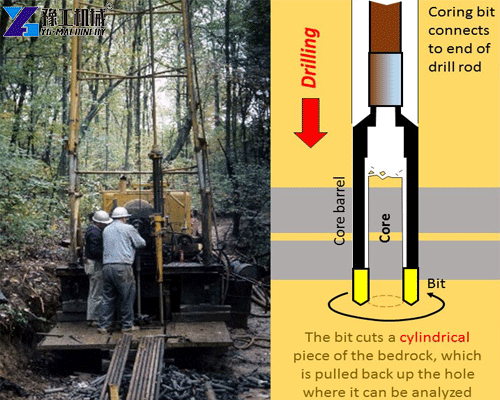
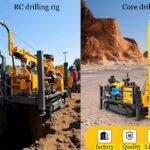
Diamond core drilling uses a rotating drill bit embedded with industrial diamonds to cut a cylindrical section of rock from underground.
As drilling continues, the intact rock cylinder is recovered as a core sample. These samples provide detailed information about the geological structure and mineralization.
Sample Collection Process
During core drilling:
The diamond bit cuts through the rock formation.
The rock core enters the core barrel.
The recovered core is removed and analyzed by geologists.
Because the original structure of the rock is preserved, core samples provide highly accurate geological information.
Why Geologists Use Diamond Core Drilling?
Diamond core drilling is preferred when exploration projects require:
Detailed geological analysis
Accurate mineral evaluation
High sample recovery
Understanding of underground structures
Advantages and Limitations
Advantages:
Excellent sample quality
High geological accuracy
Suitable for deep exploration
Limitations:
Slower drilling speed compared with some bulk sampling methods
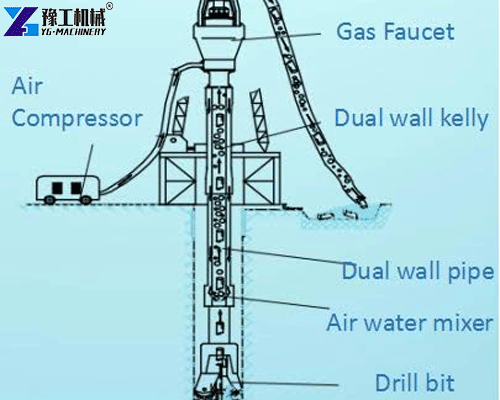
Reverse circulation drilling uses compressed air to transport rock fragments from the drilling area back to the surface through the inner tube of a dual-wall drill pipe.
Instead of producing continuous cores, RC drilling collects representative rock chips.
Sample Collection Process
During RC drilling:
The drill bit breaks the underground formation.
Compressed air pushes rock chips upward.
Samples are collected and analyzed at the surface.
This process allows exploration teams to collect large quantities of samples efficiently.
Why RC Drilling Is Widely Used?
RC drilling is popular for large exploration programs because it provides:
Faster drilling performance
Efficient sample collection
Lower cost per drilling meter
It is especially useful during early exploration stages where companies need to evaluate large areas quickly.
Advantages and Limitations
Advantages:
High drilling speed
Cost-effective for large projects
Efficient sample production
Limitations:
Provides less geological detail than core samples
Sample quality can be affected in complex formations
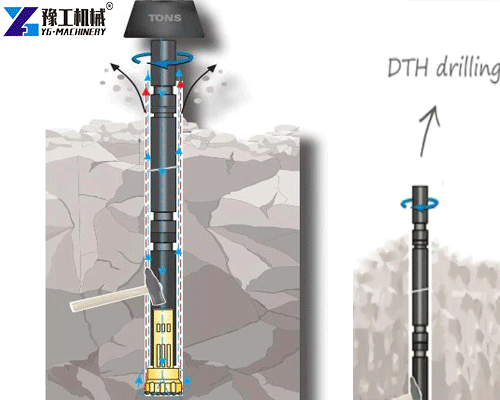
DTH drilling uses a pneumatic hammer located near the drill bit. The hammer delivers impact energy directly to the rock surface, allowing efficient penetration into hard formations.
Drilling Performance
The direct impact system provides:
Strong rock-breaking ability
Stable drilling performance
Effective penetration in hard rock environments
Suitable Geological Conditions
DTH drilling is commonly used where:
Rock formations are hard and abrasive
High penetration efficiency is required
Deep drilling performance is important
Advantages and Limitations
Advantages:
Excellent hard rock penetration
Reliable operation in challenging conditions
Suitable for deep holes
Limitations:
Mainly focused on drilling efficiency rather than high-quality core recovery
The Role of Modern Mineral Exploration Drilling Equipment
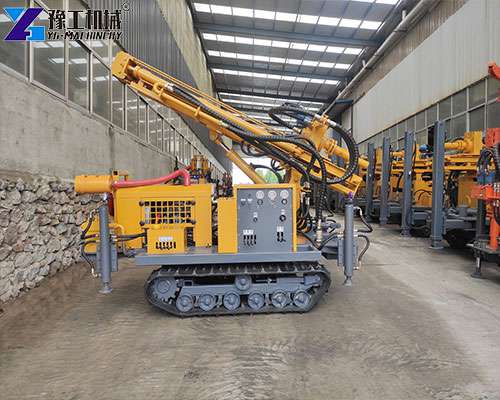
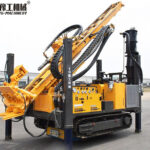
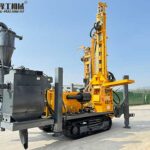
Modern mineral exploration drilling equipment combines advanced hydraulic systems, improved drilling control, and durable components to achieve better performance in demanding environments.
Key improvements include:
More stable drilling operation
Better energy efficiency
Improved operator control
Adaptability to different exploration conditions
For mining companies, reliable equipment helps maximize exploration productivity while reducing operational risks.
Conclusion
Understanding different mineral exploration drilling methods is essential for selecting an effective exploration strategy.
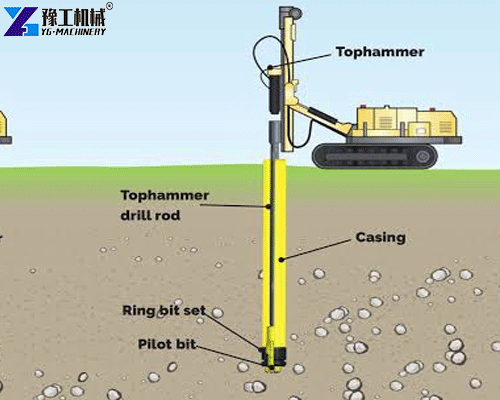
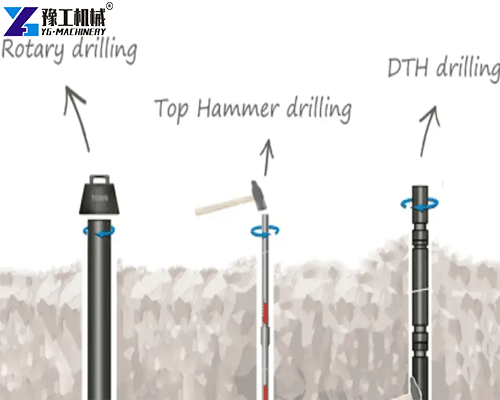
Diamond core drilling provides detailed geological information, RC drilling improves exploration efficiency, DTH drilling delivers strong performance in hard rock, while rotary and top hammer methods provide flexible solutions for different conditions.
The right drilling technology depends on geological requirements, sampling objectives, and project conditions. By selecting an appropriate method, mining companies can improve exploration accuracy, reduce costs, and make better decisions before mine development.
1.What is the most accurate mineral exploration drilling method?
Diamond core drilling is generally considered one of the most accurate methods because it provides continuous rock samples that preserve geological information.
2.Which drilling method is faster, core drilling or RC drilling?
RC drilling is usually faster because it focuses on efficient sample collection, while core drilling prioritizes detailed geological information.
3.What drilling method is suitable for hard rock?
DTH drilling, diamond core drilling, and top hammer drilling are commonly used for hard rock formations due to their strong penetration capability.
4.Why are different drilling methods used in mineral exploration?
Different methods are designed for different geological conditions, sample requirements, drilling depths, and exploration objectives.