Pump Station Sludge Removal Robot for Efficient Sediment Cleaning
Pump stations play a critical role in moving wastewater, stormwater, and drainage water where gravity flow alone is insufficient. However, continuous water flow can also carry sand, silt, sludge, and other solids into the station, where they gradually settle and accumulate at the bottom.
Over time, sediment buildup can reduce effective capacity, affect pumping efficiency, increase maintenance needs, and even interfere with normal operations. Cleaning these deposits is often challenging because many pump stations have narrow access openings, deep chambers, wet environments, and limited space for conventional cleaning equipment.
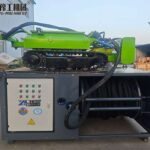
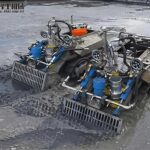
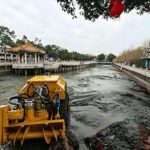
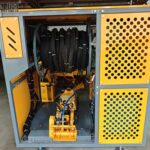
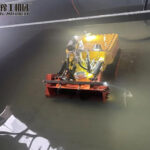
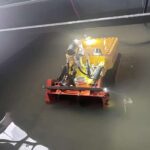
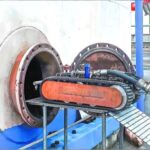
A pump station sludge removal robot provides an efficient solution for these difficult-access conditions. Instead of relying on manual cleaning or oversized machinery, a compact remote-controlled robot can enter the pump station, travel directly to sediment deposits, loosen compacted material, and pump the slurry out through a discharge pipeline.
YG Machinery provides customized robotic sludge removal solutions based on each pump station’s structure, access dimensions, sediment characteristics, pumping distance, and cleaning requirements.
Pump stations are designed to move and control water, not to provide convenient access for cleaning equipment. Over time, sediment can settle at the bottom and become increasingly difficult to remove.
Common problems include:
Narrow manholes and restricted access points
Deep or enclosed pump station chambers
Accumulation of sand, silt, and sludge
Limited space for excavators or conventional dredging equipment
Difficult manual cleaning conditions
Long suction distances from the access point
High labor requirements
Reduced pump station capacity caused by sediment accumulation
Simply placing a suction hose into the pump station may not be enough. When sludge is thick or settled across a large area, the cleaning system needs to reach the deposits and disturb them before pumping. This is where a robotic sludge removal system can provide a significant advantage.
Not every dredging robot is suitable for pump station cleaning.
A pump station sludge removal robot needs to work in a restricted environment while dealing with sediment, water, and limited equipment access. The right system should be selected according to the actual site rather than using a standard configuration for every project.
1. Compact Access Design
The first requirement is the ability to enter the pump station.
Many pump stations have relatively small manholes or access hatches. A robot that is too large cannot reach the working area, regardless of its pumping capacity.
YG can configure the robot according to the available entrance dimensions. For projects with restricted access, the robot dimensions, deployment method, and lifting arrangement can be evaluated before equipment selection.
2. Stable Crawler Mobility
Pump station floors may be covered by soft sludge, sediment, sand, or uneven deposits.
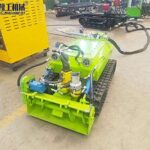
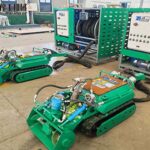
A tracked crawler design provides stable movement across the working surface and allows the robot to travel toward areas where sediment has accumulated.
Instead of cleaning only the area immediately below the access point, the robot can move across the bottom and work closer to the actual sediment deposits.
3. Remote-Controlled Operation
Pump stations can be difficult environments for manual cleaning. A remote-controlled robot allows the operator to control the machine from outside the immediate working area.
The operator can guide the robot, position it over sediment deposits, and coordinate the cleaning and pumping process without having to manually handle the equipment inside the chamber.
Remote operation is particularly useful when access is restricted and the working area is deep or enclosed.
4. Sludge Agitation Capability
Settled sludge cannot always be pumped effectively with suction alone.
Pump station sediment may contain compacted sludge, sand, silt, and other solids. The robot therefore needs a suitable agitation or cutting mechanism to loosen deposits and help create a pumpable slurry.
This allows the system to work closer to the sludge accumulation area instead of depending entirely on a suction hose from outside the pump station.
5. Powerful and Suitable Pumping
Pumping requirements depend on the sludge characteristics, water depth, discharge distance, elevation difference, and required cleaning rate.
YG can configure the pumping system according to the project requirements, with available pump capacities ranging from approximately 50 to 250 m³/h depending on the selected model and application.
The required pump head and discharge distance should be evaluated together rather than selecting a pump based only on flow rate.
6. Anti-Clogging Considerations
Pump station sediment may contain larger particles or debris that can affect pumping performance.
For projects involving sand, silt, organic sludge, or mixed sediment, the material characteristics should be assessed before selecting the pumping and agitation configuration.
A suitable system should be matched to the actual particle size and solids concentration to reduce the risk of interruptions during operation.
How Does a Pump Station Sludge Removal Robot Work?
The cleaning process combines robotic movement, sediment agitation, and slurry pumping.
Step 1: Enter Through the Access Point
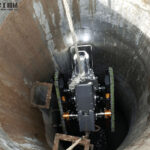
The robot is transported to the pump station and deployed through a suitable manhole or access opening.
Step 2: Move Toward the Sediment
The tracked robot travels across the bottom of the chamber under remote control.
Step 3: Loosen Settled Sludge
The working mechanism agitates or loosens accumulated sludge, sand, and sediment so that the material can be pumped.
Step 4: Pump the Slurry Out
The pump transfers the loosened material through a discharge pipeline to a designated collection, treatment, or disposal location.
Step 5: Continue Cleaning
The operator moves the robot to other accumulation areas until the required section has been cleaned.
This approach allows the cleaning equipment to move toward the sediment rather than requiring workers or long suction hoses to reach every part of the pump station.
Pump stations vary considerably in size, structure, access, sediment type, and discharge requirements. For this reason, YG does not recommend selecting a robot based on pump flow alone.
For example, a compact robot may be prioritized when the pump station has a restricted manhole, while a higher-capacity pumping system may be more important when the station contains a large volume of settled sludge.
The goal is not simply to provide a larger robot or a more powerful pump. The goal is to configure a system that can enter the station, reach the sediment, loosen the deposits, and transport the slurry efficiently.
A pump station sludge removal robot can be considered for different types of water infrastructure where sediment accumulates in difficult-access chambers.
Municipal Pump Stations: Municipal drainage and sewage pump stations can accumulate silt, sand, and sludge over time. Robotic cleaning can help remove bottom deposits without bringing large excavation equipment into the station.
Stormwater Pump Stations: Stormwater systems may carry sand, silt, leaves, and other sediment into pump stations. Regular sediment removal can help maintain available chamber capacity and support normal drainage operations.
Wastewater Pump Stations: Wastewater pumping facilities can experience sludge accumulation that requires periodic maintenance. A remote-controlled cleaning system can provide an alternative to labor-intensive manual removal.
Underground Drainage Structures: Underground structures often have limited access and insufficient space for conventional machinery. A compact crawler robot can be considered when the internal dimensions allow deployment and movement.
Why Use a Robot Instead of Conventional Cleaning Equipment?
Different cleaning methods are suitable for different conditions. However, conventional equipment can become difficult to use when the pump station has restricted access.
Conventional Excavator: An excavator provides strong digging capability but normally requires a large access opening and sufficient space around the working area. It may not be practical for underground pump stations.
Manual Cleaning: Manual cleaning can require significant labor and may be difficult to organize in deep or restricted-access structures.
External Suction Equipment: Vacuum or suction systems can remove pumpable material from outside the station, but their effectiveness may decrease when sludge is thick, compacted, or located far from the suction point.
Robotic Cleaning: A robotic system brings the working equipment into the pump station. The robot can move toward sediment deposits, loosen material, and pump the slurry through a discharge line.
For difficult-access pump stations, this combination can provide a more flexible cleaning approach.
Key Advantages of YG Pump Station Sludge Removal Robots
Remote Operation: Operators can control the robot from outside the immediate cleaning area, simplifying operation in restricted-access environments.
Compact Configuration: Robot dimensions can be evaluated against the available manhole or access opening before deployment.
Powerful Sludge Removal: The system combines agitation and pumping to handle settled sludge and sediment more effectively than suction alone.
Long-Distance Slurry Discharge: The pumping system can be configured according to the required discharge distance, pump head, and site layout.
Flexible Mobility: The crawler design allows the robot to move across the sediment-covered bottom and reach different cleaning areas.
Project-Based Customization: YG can recommend and configure the robot based on the actual pump station rather than applying the same model to every project.
Get a Pump Station Sludge Removal Solution from YG
Cleaning a pump station is not simply a matter of choosing the most powerful pump.
The robot must first be able to enter the station. It must then move effectively across the working surface, handle the actual sludge characteristics, loosen settled deposits, and transport the slurry over the required distance.
YG Machinery can customize the robotic sludge removal solution around these requirements.
Whether you are cleaning a municipal drainage pump station, stormwater facility, wastewater pumping station, or underground water infrastructure, our technical team can evaluate the site conditions and recommend a suitable robot configuration.
Send us your pump station dimensions, access opening size, sludge information, and discharge requirements to get a customized model recommendation.
A pump station sludge removal robot is a remote-controlled crawler machine designed to remove accumulated sludge, silt, sand, and sediment from pump station chambers and other difficult-access structures.
2.Why use a robot for pump station cleaning?
Pump stations often have restricted access and limited internal working space. A compact remote-controlled robot can enter the chamber, move toward sediment deposits, loosen the material, and pump it out without requiring conventional heavy equipment inside the station.
3.Can YG customize the robot for my pump station?
Yes. YG can recommend the robot configuration according to access dimensions, chamber size, sludge characteristics, working depth, pumping distance, and other site conditions.
4.What pump capacity is available?
Depending on the model and project requirements, YG dredging robots can be configured with pump capacities of approximately 50–250 m³/h. The suitable capacity depends on sludge characteristics, discharge distance, pump head, and required cleaning efficiency.
5.Can the robot remove sand and sediment as well as sludge?
The system can be configured for different sediment conditions, including sludge, silt, sand, and slurry. Material characteristics and particle size should be provided before equipment selection.
6.Can the robot enter through a small manhole?
The answer depends on the selected robot configuration and the actual access dimensions. Customers should provide the manhole width and height so YG can evaluate a suitable model.
7.What information should I provide for a quotation?
Please provide the pump station access opening dimensions, chamber dimensions, sludge type and thickness, water depth, estimated sludge volume, required discharge distance, and site photos or videos. These details allow YG to recommend a suitable pump station sludge removal robot.